Add up to five places — home, work, school, Mom's — and on any morning tornado or severe-weather activity touched them, we tell you what happened, with the history of what's hit there before. Alerts the moment a warning newly covers one of your places are coming this season.
Free for up to 5 places · one email a morning · unsubscribe in one click
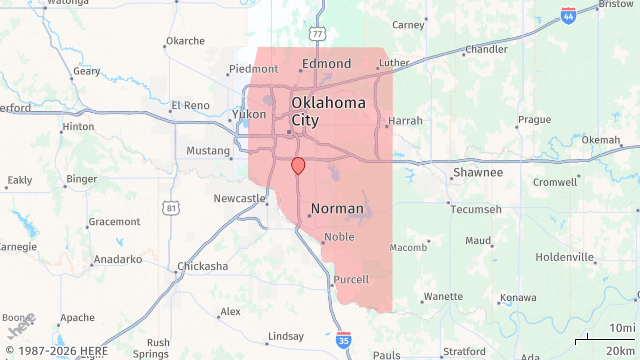
A Tornado Warning covered Home (Moore, OK) — inside the warning polygon, not nearby. NWS called it radar-indicated. Sample from a past event; your reports use live warnings.
One place to understand tornado and severe-weather risk at the places that matter to you.
By 7 am your time, on mornings when something touched your places (or every morning, if you ask): which of your places sit inside an active tornado warning, severe thunderstorm warning or watch, how far the hazard edge is from each, and what changed since yesterday.
We're building it now: when a warning newly covers one of your places, escalates, or clears, one email — bundled, capped, and quiet overnight unless it's a tornado warning. Until it's live, the morning report carries everything that happened at your places.
How many tornado warnings have covered each place since 2014, the nearest surveyed damage path, the strongest rating, and the months it happens. Plainly written, so "does my town get tornadoes?" has an answer.
This is what lands in your inbox. Built from an actual NWS tornado warning that covered Moore, OK — labelled as a sample.
A Tornado Warning covered Home (Moore, OK) — inside the warning polygon, not nearby. NWS called it radar-indicated. Sample from a past event; your reports use live warnings.
Since yesterday: new. We'll email you when it clears.
TornadoAWARE is context, not a siren. Wireless Emergency Alerts, NOAA Weather Radio and local sirens are the official warnings and are faster in the first minutes — we are typically a few minutes behind the National Weather Service.
Warnings typically reach our data within a few minutes of NWS issuance, and we check for changes at your places every few minutes. That makes us a context layer, not a siren — see the note above. Official channels remain the first warning.
No. Pick a city, a neighbourhood, a landmark or a postal code if you'd rather not share an address. For a city we treat the whole city as your place, so you're covered if any part of it is in a warning.
A watch means conditions favour tornadoes over a wide area for several hours. A warning means a tornado is indicated by radar or has been seen — act now. Warnings trigger alerts; watches appear in your morning report.
NWS warnings say whether a tornado was detected by radar or actually seen by a spotter. We surface that flag in every alert because it's the question you're asking while sheltering: has someone actually seen it?
Yes, for up to five places. If you need more we're planning a paid plan — you can tell us on the signup form whether you'd use it.
DisasterAWARE, the hazard-intelligence platform built by DisasterIQ and used by Pacific Disaster Center, emergency managers and enterprises worldwide. TornadoAWARE puts the same data in front of individuals.
Every email has a one-click unsubscribe link and a manage link where you can change places, pause, or delete your data.
We're planning a plan for up to 20 places at $8/month — would you use it?